CPA Experts Rockwall Alternative.CPA Rockwall.Picture the decades, then skip them.
Years beside a name do not close the books you still have open. A list arranged by twenty years and thirty years never shows whether March matched the bank.
Skip the decades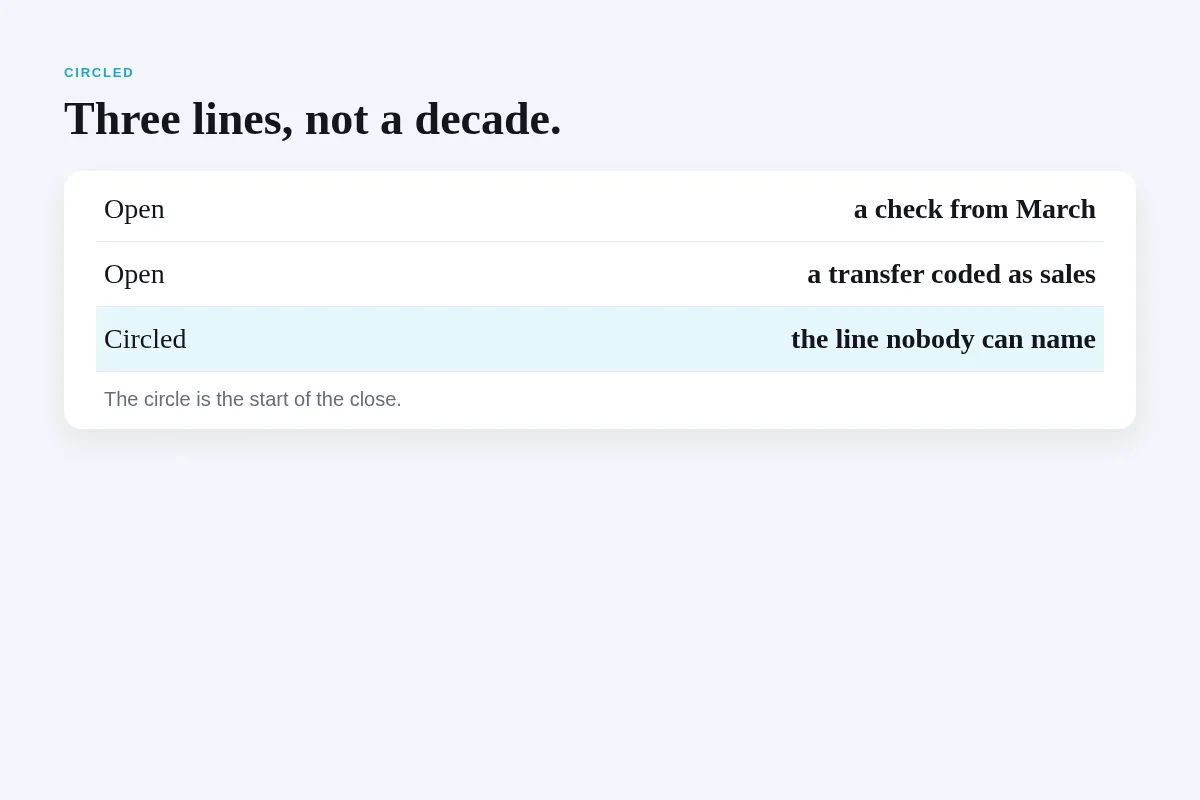
The picture is easy, and it is empty
Read The picture is easy, and it is empty
Picture the page. Names in a column. A number of years beside each one. Someone has sorted the column so the long careers float to the top. It looks like diligence. It answers none of the questions that cost money. Did the bank feed clear. Are there checks no one has claimed. Did a personal deposit get booked as sales. Is payroll set up, or is payday still a transfer with a nickname. The decades are silent on all of it.
We start from the reconciliation, not from the sort. A month is closed when the statement and the books tell the same story and the open items are named. Uncleared items get a home or they get a question. A question is allowed to stay open. A silent difference is not.
What the return then inherits
Read What the return then inherits
The return inherits those months. It should not inherit a reconstruction. Book to tax is a bridge between the closed year and the return, built from the same chart, not from a fresh download in a panic. If an election is in place, the bridge has to respect it. If wages were never run through a provider, the bridge will show that too, in time to talk about it before the year is locked in habit.
Information returns for contractors are the same habit earlier in the year. Names, amounts, and a file that is ready before the deadline crowd. A decades list will not collect those W-9s. A monthly question will. We ask it while the vendor is still returning calls.
A better picture
Read A better picture
The better picture is dull, which is the point. Twelve months, each tied to a bank, each with a date, each able to explain a weird deposit in one sentence. You can hand that to us, or we can build it with you from the oldest open month forward. Either way the decades page can stay in the drawer. It was never the file.
If you have been collecting those lists because choosing felt risky, bring one question instead. The risk gets smaller when the month is specific. A specific month can be fixed. A sorted list of strangers cannot.
The town keeps better pictures anyway
Read The town keeps better pictures anyway
This county already has pictures worth keeping. The square on a market morning. The causeway when the light hits the water. None of those pictures are a credential, and none of them need to be. They are why the month feels like yours. The books should be able to name a Saturday deposit without borrowing a decade from a directory. A credential is the closed month, not the photograph beside it.
What the sorted picture leaves out
Read What the sorted picture leaves out
A list sorted by decades is easy to photograph and easy to trust, because length looks like care. The picture leaves out the only pages that change the year. The March statement. The checks that never cleared. The transfer that got coded as a sale. The sales tax that was due around the 20th and was guessed from a screen. None of those show up beside a name that has been printed for a long time.
We start from the oldest month that does not match and we walk forward. Each month gets a statement, a list of what is still open, and a sentence that says why. When the open list is short enough to read aloud, the return has something honest to inherit. Until then a decade count is a decoration on top of a guess.
Payroll belongs in that same walk. The payroll file is built beside you, and the provider you name is the one that runs payday once that handoff is real. A picture of a directory cannot tell you whether that handoff happened, and by summer the deposits and the wages will disagree if it did not.
Saturday's deposit still has to meet the company that earned it, and a sorted list will not be in the room when you do it. A neighbor's nod on the square is warmer than a decade count, and it is still not a workpaper. We enjoy the square with you, as neighbors, and then we open the statement.
If you want a picture that actually helps, photograph the statement and the open items, not the ranking. Circle what you cannot explain. That circle is the start of the close. We would rather spend the first call on three circled lines than on a decade count that cannot change the return.
A machine on the books and a tuition check both need a date and a company. A sorted list of names has never asked for either one. Bring the date and the company, and the picture becomes useful. An asset with no placed in service date and a check with no owner are the same kind of hole, and both of them can be named in the month they happened.
Say what March is missing

You will be talking to the Steven Palmieri practice.