
CPA Experts Rockwall Alternative.CPA Rockwall.Close the books before the fee.

Someone quoted a fee before asking how the books actually look. We close those books to the bank, reconcile each account, and set payroll up on the provider you already run.
Open the booksFinancial statements come from that close, and the return is prepared from the same books. Ask for Steven Palmieri by name. The Tax CFO title is how this practice lists the role, and Entrepreneur's CFO is what owners say when they want that same person on the books.
What the books need

You will be talking to the Steven Palmieri practice.
Fee after the close.
The Tax CFO way with a fee.
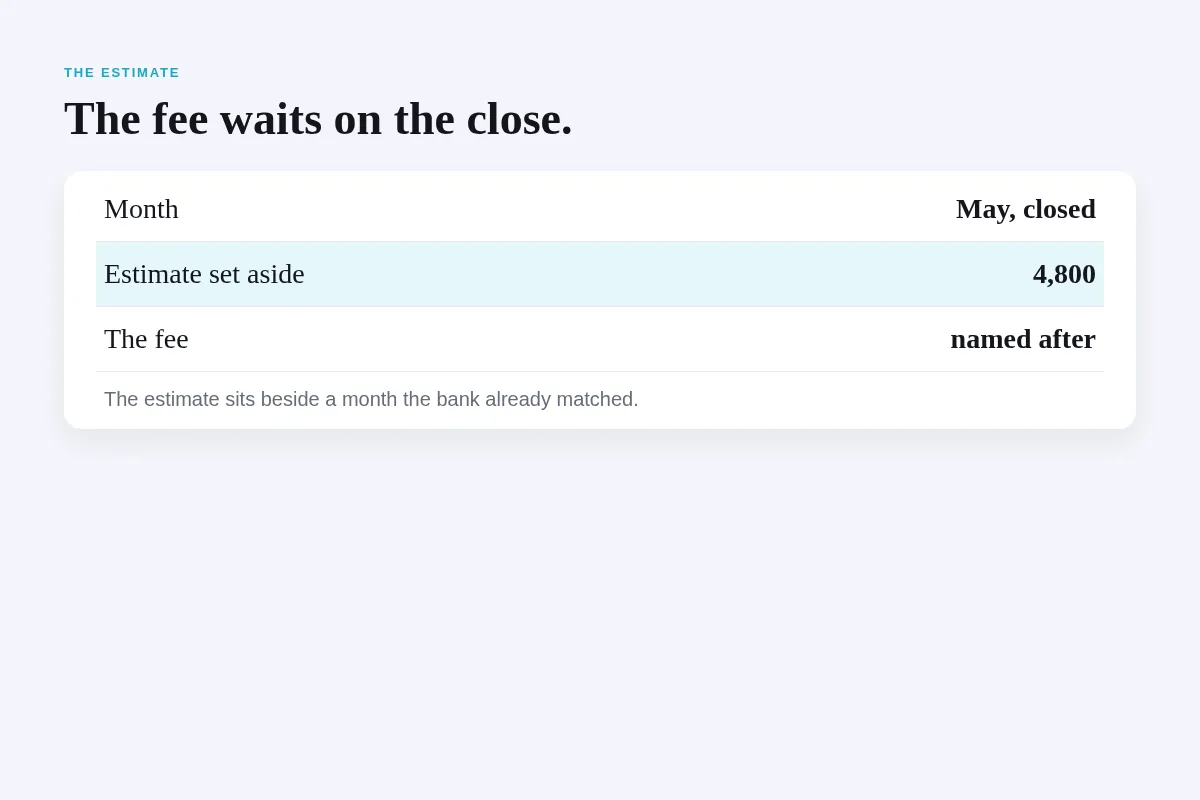
A return quoted in April is built from whatever the file still holds. We close the books first, then set owner pay, the estimate, and the election from figures the bank already matched. The fee gets a name only after that close.

The fee after the books
Saturday's cash on the square is booked before Monday, and the fee waits until the bank agrees.
Click to read the fee ›Tap to read the fee ›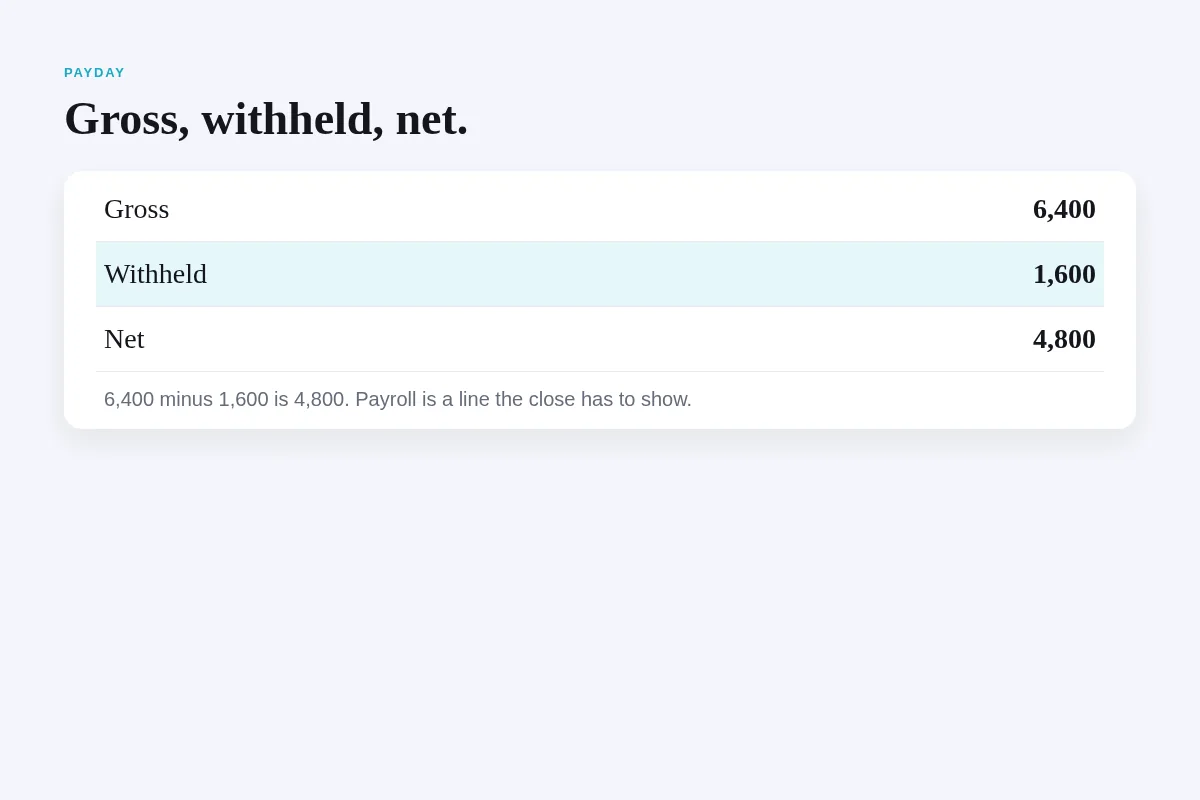
Payroll on your provider
Payroll runs on the provider you already use. We set the file up. You keep the login.
Click to see payday ›Tap to see payday ›
The return from closed books
Texas's smallest county sends a wrong pile back as a letter while the books can still be fixed.
Click to see the return ›Tap to see the return ›
A short-term rental's four lines
We enjoy The Harbor the way you do, and room tax and the till stay in two piles.
Click to see the stay ›Tap to see the stay ›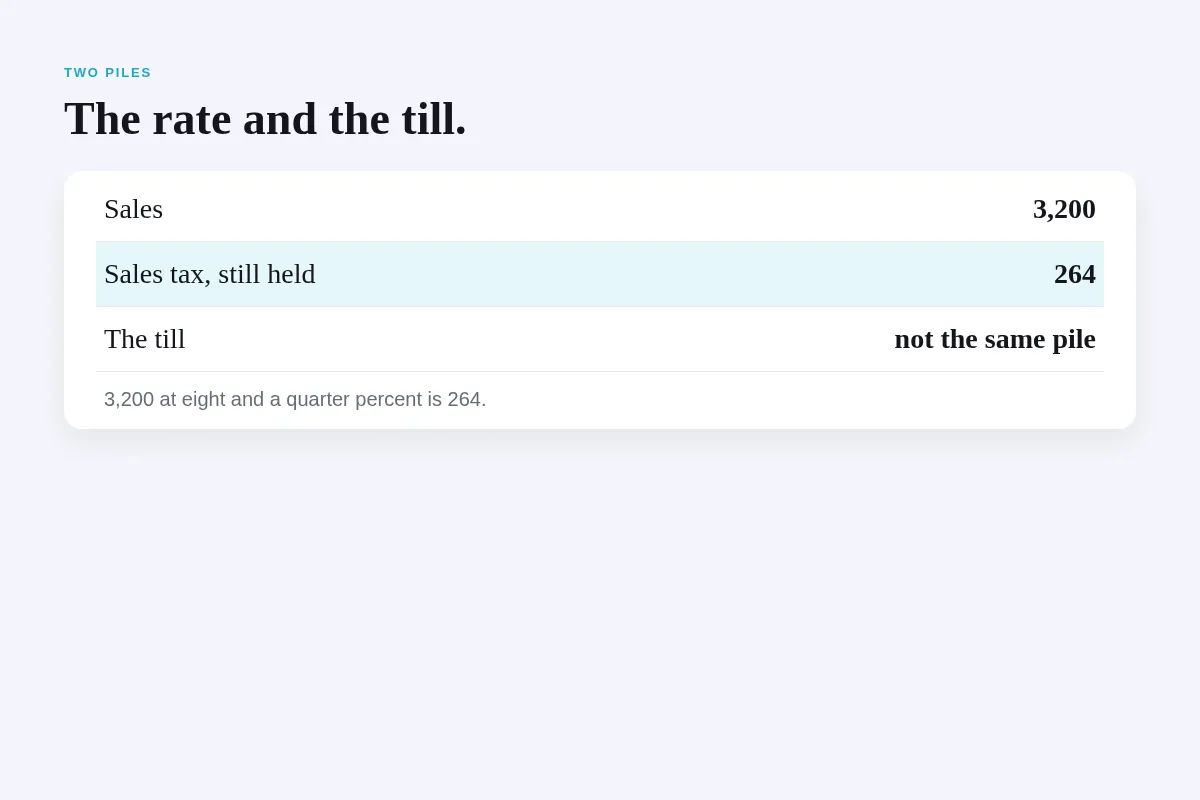
Sales tax on the 20th
We share the two high schools as neighbors, and the sales tax deposit still meets the return around the 20th.
Click to see the 20th ›Tap to see the 20th ›
A person answers
Steven Palmieri reads the books before anyone names a fee. The phone reaches a person at this practice.
Click to see who answers ›Tap to see who answers ›
Six questions before a fee
Open one card before a price.
1City limit
We ask this before a fee, because the city rate and the rate past the limit are different piles.
A rental inside the city and a rental just outside it do not share one sales tax stack. That boundary decides the return.
2Unregistered stay
We ask whether a short stay was registered with the city before the income is parked in a company.
The ordinance has been in force since the first of April 2024. A login to the permit portal is not the same as a closed month.
3The notice
We read which entity the letter names. The appraisal district serves several of them from one office.
Ten names can share one map. The reply answers the one notice that arrived.
4Decade list
We would rather see whether March was tied to the bank than how many years a name has been printed.
A directory can sort people. It cannot author the return. The closed months do that.
5Payday owner
We set the payroll file up with you, and a company you name runs payday after that.
A file with no owner is how deposits and the return drift apart by summer.
6Open books
We do not price a year while the last close is still a guess against the bank.
Open books are the work still on the table. The return starts after the bank agrees.
Steven Palmieri
Steven Palmieri, a Tax CFO and the Entrepreneur's CFO, in Dallas. Steven and his team stay with the open items until each one has a name.
Book a callName the open books
Name the books, the stay, or the notice.
You will be talking to the Steven Palmieri practice.
Side before the fee
Read Side before the fee
People around Lake Ray Hubbard often own a place they rent, and the first useful question is which side of the city limit that place sits on. Inside the city the local sales tax is the city's own two percent, stacked on the state six and a quarter, for a combined eight and a quarter. The county does not stack its own sales tax on top of the city's two percent. Step outside the city, into parts of the county the fire district covers, and a half percent district tax can apply instead of the city's two percent. Those are not the same pile, and a fee quoted before that boundary is known is a fee for a job nobody has described.
We like the square on a Saturday as much as you do. The courthouse lawn, the stalls, and the slow walk back to the car are the town being itself. When the morning's bills are still in a pocket on Monday, the bank will not match the books, and the close waits on that cash. We share Texas's smallest county with you. A wrong pile comes back as a letter while those books can still be fixed.
Bring the address, or the notice, or just the cross street you are sure of. We will say which question is next. Sometimes the next question is the rental registration. Sometimes it is which entity printed the letter. The fee, if there is one, comes after that, in a conversation, not on a card beside the question.
The stay's own file
Read The stay's own file
The city has required every short term rental to register, under an ordinance in force since the first of April 2024. Permits and that registration run through the city's public portal. A password to that portal is not something we ask for. What we ask is what changed in the month because of it. Income that belongs to a stay, a cleaning bill, a platform deposit, and a hotel tax are four different lines. Mixed into one, they make a year nobody can explain in April.
The state hotel tax is six percent of a room priced at fifteen dollars or more a day. The city's own hotel tax is a separate local choice, and the statute that points its use toward tourism, arts, and historic preservation is Tax Code chapter 351. Where a percent is not printed on the page we read, we do not guess it. We read the ordinance with you and then the books show the number the ordinance actually names.
Harbor Bay Marina and the hotels along that strip make the feeling obvious. A full dock on a warm Saturday is a good day in this town. It is also a day when room tax and a cafe till can land in the same deposit if nobody is watching. We watch for that split on purpose.
One office
Read One office
The county appraisal office values property for ten taxing units. Rockwall ISD sits on that public list beside Royse City, Royse City ISD, the City of Heath, and several utility districts. The county and the city are on that list too. One office does the shared valuing, and the reply answers the single name the notice printed. We share the district's two high schools as neighbors. A notice that carries the school name stays in the property pile, apart from sales tax.
Business property that you move, or lease, or put in service has a rendition season that clusters in the middle of April. A letter can stretch the window. The asset page we keep names each thing and the day it started working. You add what the paper file never saw, and the rendition goes out over your signature. Driving to the district's road does not do that list for you. The list is the work.
If a hangar, a truck, or a kitchen build showed up this year, say so in the note. We would rather meet the asset in March than discover it inside a notice in May.
Directory limits
Read Directory limits
A list sorted by how many decades a name has been printed is a directory. It can tell you that a person has been around. It cannot tell you whether last March was tied to the bank, whether payroll is set up on a provider you actually run, or whether the return will be prepared from those months. Months the statement does not support stay out of the return. You sign it. The public register, if you want to see who holds a license, is the state board site. The page named disclosures holds the full limit on a signature, with no short version in front of it. That page is the only place the line needs to live.
The rest of the reading on this door is the same habit, one question at a time. Circle the sender on the letter before anyone drafts a reply. Choose the entity before anyone quotes a month. Leave the price off the page until the questions have been asked. A portal login is not the books. The district's road is not a method. A listing does not author the return. Decades on a list skip the reconciliation. The school names and the sales tax are two calendars that share a week and should not share a pile.